
Drywall Taping Services

- Seams, Corners, Ceilings & Tape Repair -

  • Since 2010
  • Bonded And Insured
Downtown Los Angeles skyline with palm trees

Quality Walls
Stronger
Spaces

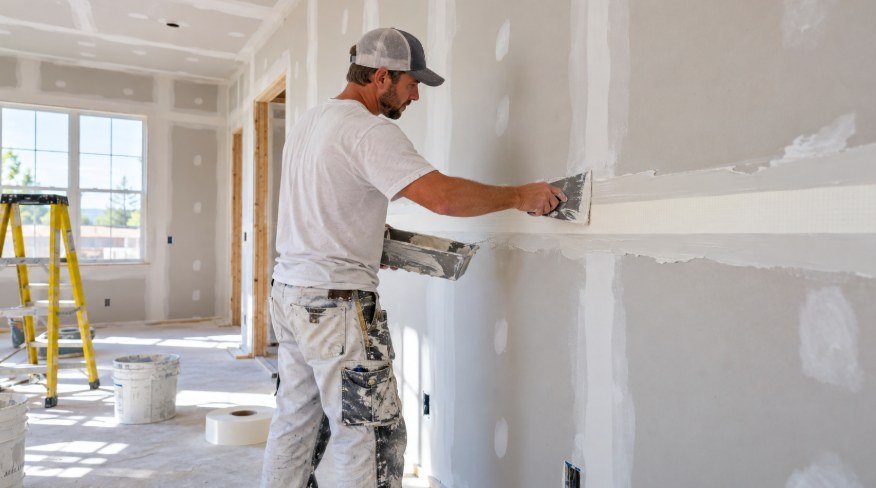
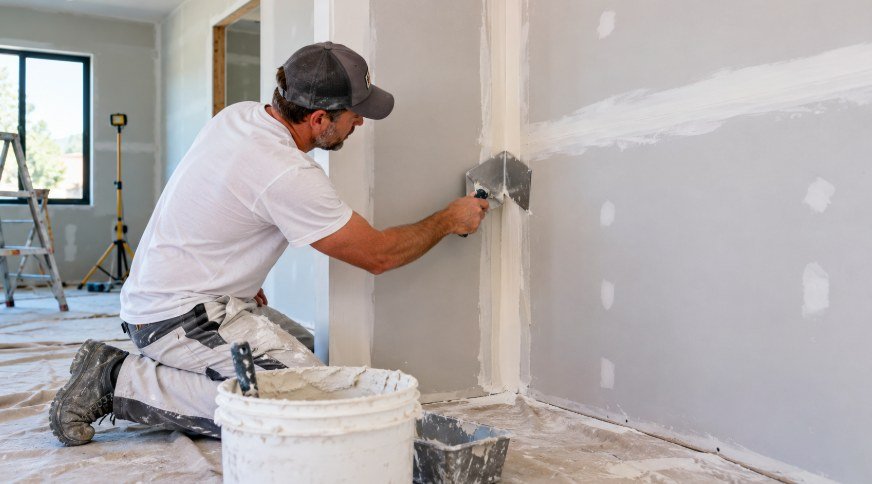
Drywall finisher embedding tape along a wall seam with a taping knife

Strong Seams.
Smooth
Walls.

Drywall Taping Services

Drywall taping is one of the most important steps in creating smooth, finished walls and ceilings. Once drywall panels are installed, the joints between sheets, inside corners, outside corners, repair areas, and other transitions must be properly reinforced before the surface can be finished.

Professional drywall taping helps strengthen seams, reduce visible cracking, and create a better base for joint compound, sanding, texture, primer, and paint. Poorly installed tape can lead to bubbles, loose edges, cracked seams, visible ridges, or other imperfections that become more noticeable after the wall is painted.

Our drywall taping services cover new drywall, repairs, ceilings, corners, residential properties, commercial interiors, paper tape, mesh tape, and correction of existing tape problems.

New Drywall Taping

New drywall installation leaves visible joints between every panel.

These joints must be prepared before finishing can begin.

Drywall tape is embedded into joint compound over the seams to create a reinforced connection between adjoining panels. The tape is then covered with additional compound and gradually feathered into the surrounding drywall.

Proper taping at this stage helps create smoother walls and ceilings and provides a strong foundation for the coats that follow.
Drywall Joint Taping

Drywall joint taping focuses on the flat seams where two sheets of drywall meet.

Joint compound is applied over the seam, tape is positioned into the wet compound, and the surface is smoothed to remove excess material and trapped air.

Additional coats of joint compound are usually applied over the taped joint after the initial layer has dried.

The objective is to gradually widen and flatten the finished area so the seam becomes less noticeable.

Ceiling Joint Taping

Ceiling seams can be especially visible because natural light and overhead fixtures can highlight uneven surfaces.

Ceiling joint taping requires careful placement and smooth finishing across long seams.

The tape must remain properly embedded while the surrounding compound is feathered into the ceiling surface.

Ceiling taping may be required during new construction, remodeling, ceiling replacement, patch repairs, or after access openings have been closed.

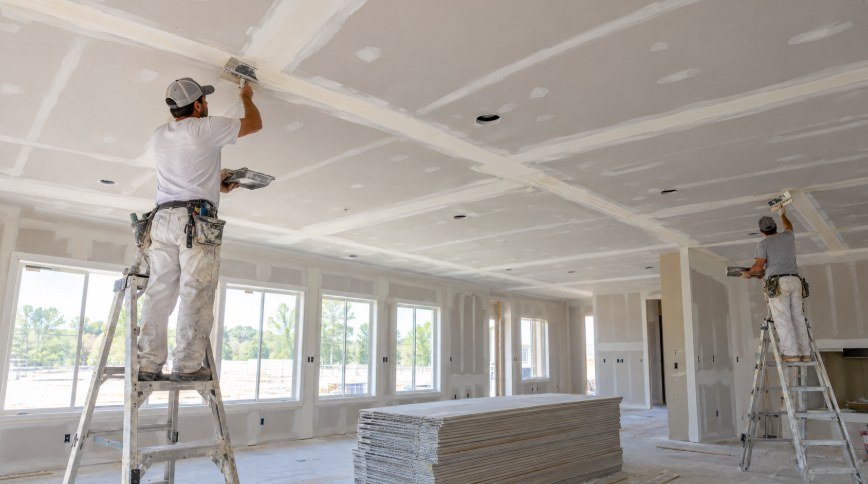
Drywall finishers on ladders taping ceiling joints in a new home

Corner Taping

Corners are critical areas because two drywall surfaces meet at an angle.

Proper taping helps reinforce these transitions and provides a cleaner finished edge.

Corner taping may involve inside corners, outside corners, wall-to-ceiling transitions, soffits, alcoves, and other architectural features.

Accurate tape placement is important because uneven corners can remain visible even after painting.

Outside Corner Taping

Outside corners require a durable, straight edge.

Depending on the system being used, outside corners may involve corner bead, paper-faced corner products, tape, or other approved finishing materials.

The corner must be aligned correctly before joint compound is applied.

Once finished, the area should transition smoothly into both adjoining wall surfaces without creating a noticeable bulge.

Inside Corner Taping

Inside corners are found where two walls meet or where walls connect to ceilings.

Paper drywall tape is commonly used because it can be folded cleanly along its center line.

Joint compound is applied to both sides of the corner, the tape is placed into position, and the material is smoothed to create a straight crease.

Additional coats are then applied and feathered away from the corner to create a cleaner finish.

Drywall finisher using a corner tool to tape an inside corner

Drywall Tape Repair

Existing drywall tape can become damaged because of age, movement, moisture, poor installation, impact, or repeated repairs.

Signs of tape problems may include visible edges, peeling tape, cracks, bubbles, wrinkles, or raised seams.

Repairing the problem may involve removing the loose or damaged section and reinstalling new tape rather than simply applying more compound over the surface.

A proper repair creates a more stable base for refinishing.

Loose Drywall Tape Repair

Loose drywall tape often appears along seams or corners where the tape has separated from the compound underneath.

The loose portion should usually be removed or opened enough to eliminate unstable material.

New joint compound and tape can then be applied to rebuild the joint.

Covering loose tape without addressing the separation may allow the problem to return.

Bubbling Tape Repair

Bubbles form when sections of drywall tape do not bond properly to the compound underneath.

They may appear immediately during installation or become noticeable after the wall dries.

Small bubbles sometimes require the affected tape to be cut out and repaired.

Larger areas may need the tape removed completely and replaced.

Proper compound coverage beneath the replacement tape helps prevent trapped air and improves adhesion.

Cracked Tape Repair

Cracked drywall tape may indicate movement along the joint, deterioration of the compound, or an older failed repair.

The crack can sometimes follow the exact line of the seam.

A long-lasting repair may involve removing damaged material, reinforcing the joint with new tape, and rebuilding the finish with several coats of compound.

Recurring cracks may warrant closer attention to the condition of the surrounding wall or ceiling.

Taping After Drywall Repair

Drywall patches often require taping around the perimeter of the new piece.

Once the replacement section has been installed securely, the seams around it can be reinforced with drywall tape.

Joint compound is then applied in progressively wider coats to blend the patch into the existing wall.

Proper taping is especially important for larger patches because visible edges can otherwise remain around the repair.

See our drywall repair services →

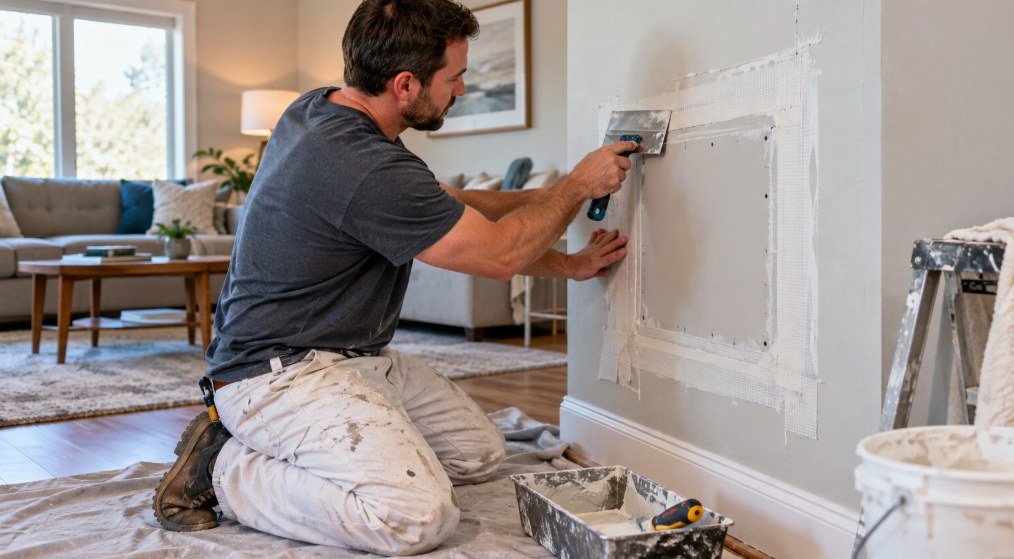
Technician applying mesh tape and compound around a new drywall patch

Commercial Drywall Taping

Commercial taping projects may involve offices, retail stores, restaurants, medical spaces, apartment buildings, hotels, schools, warehouses, and tenant improvements.

Larger projects often include long runs of drywall joints, numerous corners, soffits, ceilings, partitions, and specialty wall systems.

Consistency becomes particularly important because the same finish must often be maintained across large areas.

Commercial taping may be coordinated with metal framing, ceilings, electrical work, HVAC installations, and other trades.

See our commercial drywall services →

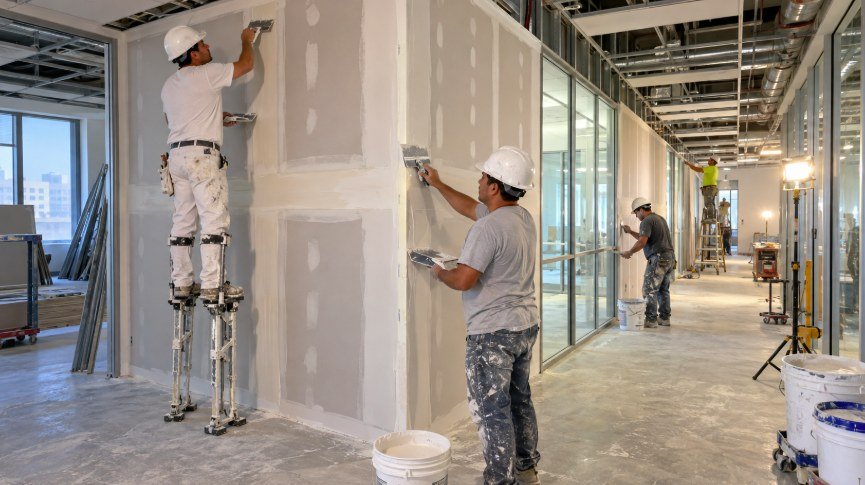
Commercial drywall crew on stilts taping and finishing office corridor walls

Residential Drywall Taping

Residential drywall taping can be used for new homes, remodels, additions, basements, garages, bedrooms, living rooms, kitchens, bathrooms, condos, apartments, and townhouses.

Services may include taping newly installed drywall, repairing damaged seams, retaping corners, finishing patches, or restoring walls after plumbing and electrical work.

Careful residential taping helps create smoother surfaces that are ready for paint or texture.

See our residential drywall services →

Why Proper Drywall Taping Matters

Drywall tape becomes part of the finished wall even though it should not be visible when the project is complete.

If tape is installed unevenly, insufficient compound is used, or trapped air remains underneath, the finished wall may develop ridges, bubbles, cracks, or loose seams.

Good taping creates reinforcement while keeping the joint as flat as possible.

The finishing coats can then be feathered gradually over the surrounding drywall to produce a smoother transition.

Drywall Taping FAQs

Tape reinforces the joints between panels. Proper taping helps prevent cracks, bubbles, and visible seams after the wall is painted.

Both, depending on the job. Paper tape is common for seams and inside corners, while fiberglass mesh tape can work well for certain repairs and patches.

Yes. We remove the loose or bubbled section, embed new tape in fresh joint compound, and refinish the joint so the problem is less likely to return.

We can handle taping as part of a full installation and finishing project, or as a separate service for walls someone else has hung.

Taping, mudding, and finishing typically starts from about $1.50 to $3.00 per square foot. Final pricing depends on project size, access, finish level, and site conditions.

Complete Drywall Taping Solutions

Drywall taping connects the installation stage with the finishing stage.

Whether the project involves brand-new drywall, ceiling seams, inside corners, outside corners, residential repairs, commercial interiors, or damaged existing tape, careful workmanship is essential.

From paper tape and fiberglass mesh to seam repair, bubbling tape, cracked tape, loose tape, and patch finishing, professional drywall taping helps create stronger, cleaner walls and ceilings.

The objective is a stable, smooth surface that is properly prepared for mudding, sanding, texture, primer, and paint.

Book Service

Prefer to talk? Call (323) 419-2033

Let’s Build
Better Spaces Together

Professional Drywall Services
for a Stronger, Brighter
Los Angeles