
Drywall Installation Services

- New Construction, Remodels & Replacements -

  • Since 2010
  • Bonded And Insured
Downtown Los Angeles skyline with palm trees

Quality Walls
Stronger
Spaces

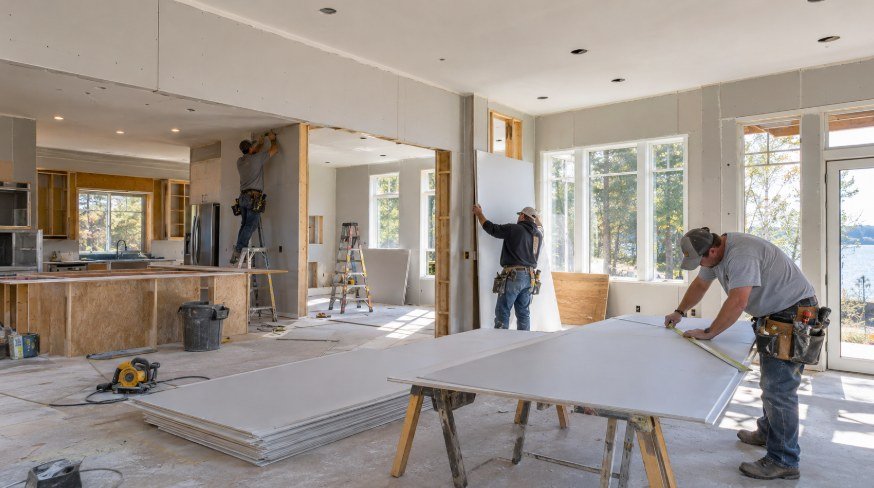
Drywall installers measuring, cutting and hanging panels in a home remodel

Measured, Cut
& Hung
the Right Way

Drywall Installation Services

Professional drywall installation creates the smooth walls and ceilings that shape the interior of a home or commercial property. Whether the project involves new construction, remodeling, a basement, garage, kitchen, bathroom, or complete drywall replacement, accurate installation is essential for achieving a clean and durable final result.

Drywall installation involves much more than simply attaching panels to framing. Proper planning includes measuring the space, selecting the correct board type, positioning sheets efficiently, cutting around doors, windows, electrical boxes, lighting, vents, plumbing, and other building components, and preparing the surface for taping, mudding, sanding, texture, or paint.

Different spaces may also require specialized drywall products for moisture resistance, fire resistance, mold resistance, sound control, or other project requirements.

New Construction Drywall Installation

New construction drywall installation begins after framing and major mechanical systems are in place.

Drywall panels are installed throughout walls and ceilings to create the finished interior layout of the building. Accurate measurements are especially important around windows, doors, outlets, recessed lighting, plumbing connections, HVAC vents, and architectural features.

New construction projects may include bedrooms, living areas, kitchens, bathrooms, offices, hallways, closets, garages, basements, and other spaces.

Proper panel placement helps reduce unnecessary seams while providing a better foundation for the finishing process.

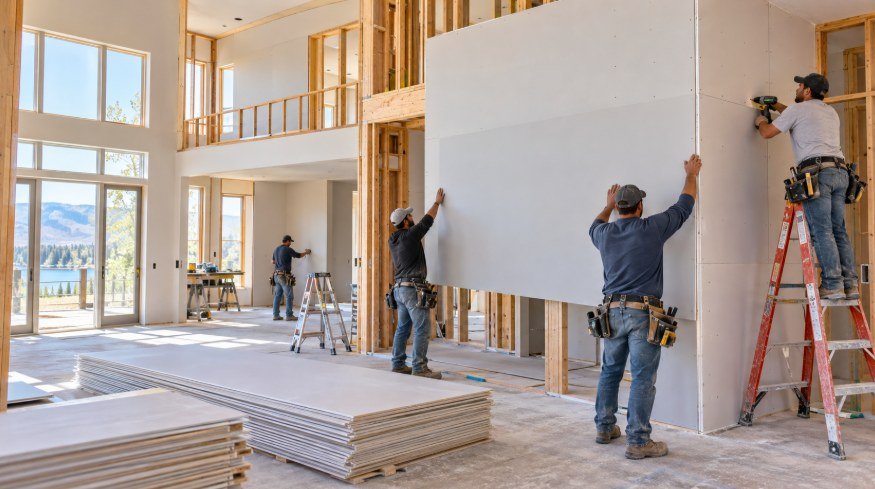
Drywall crew hanging tall wall panels in a new construction home

Remodeling Drywall Installation

Interior remodeling frequently requires new drywall when walls are moved, rooms are expanded, doorways are changed, or plumbing and electrical systems are relocated.

Drywall installation can help rebuild affected areas and connect new construction with existing walls and ceilings.

Common remodeling projects include kitchen renovations, bathroom renovations, room additions, basement finishing, garage conversions, home offices, open-concept layouts, and complete interior renovations.

Matching the new drywall to surrounding surfaces is an important part of creating a consistent finished appearance.
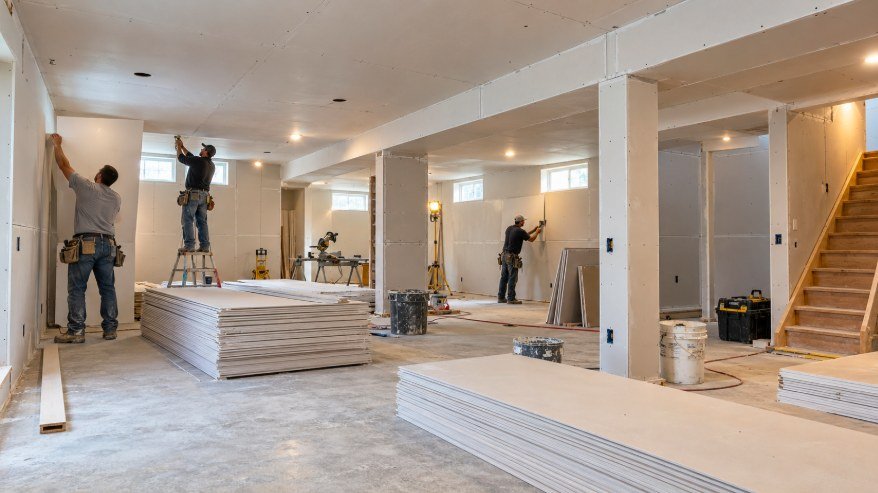
Wall Drywall Installation

Interior walls define the layout of a property, and drywall is one of the most common materials used to finish them.

Wall drywall installation can be completed over wood framing or metal studs depending on the project.

Panels must be positioned carefully around outlets, switches, windows, doors, plumbing, cabinets, built-in features, and other openings.

Once the boards are attached, joints and fasteners can be prepared for finishing.

Wall drywall installation is commonly needed for new rooms, partitions, closets, hallways, offices, bedrooms, living spaces, and remodeled interiors.

Ceiling Drywall Installation

Ceiling drywall requires careful handling because large panels must be positioned overhead and secured properly.

Residential and commercial ceiling drywall installation can include flat ceilings, vaulted ceilings, tray ceilings, soffits, garage ceilings, basement ceilings, and ceilings with recessed lighting.

Ceiling panels may need to be fitted around lights, vents, sprinkler components, access panels, beams, ductwork, and other features.

Consistent panel placement and finishing are particularly important because ceiling imperfections can become noticeable under natural or artificial lighting.

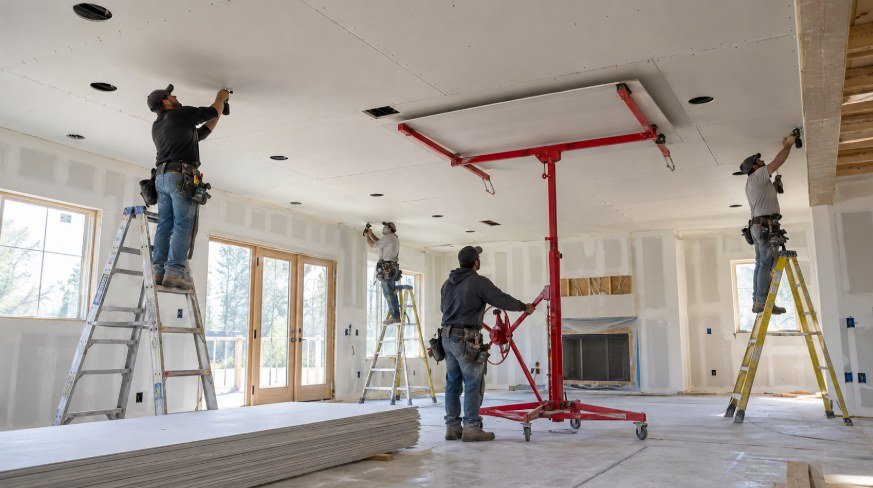
Installers using a drywall lift to hang ceiling panels around recessed lights

Basement Drywall Installation

Drywall can transform an unfinished basement into comfortable and functional living space.

Basement drywall installation may include walls and ceilings for bedrooms, family rooms, home offices, entertainment areas, storage rooms, laundry rooms, and utility spaces.

Projects often require drywall to be installed around ductwork, plumbing, support columns, stairways, electrical systems, and mechanical equipment.

The result is a more finished interior that can be prepared for paint, flooring, trim, and other improvements.

Drywall crew installing wall and ceiling panels around columns in a basement

Garage Drywall Installation

Garage drywall installation can improve the appearance and usability of attached or detached garages.

Drywall may be installed on exterior-facing walls, interior walls, ceilings, storage areas, or walls separating the garage from other parts of the home.

Garages often contain electrical equipment, garage door tracks, openers, shelving, plumbing, and storage systems that must be considered during installation.

Depending on the building design and applicable requirements, specific walls or ceilings may need particular drywall assemblies.

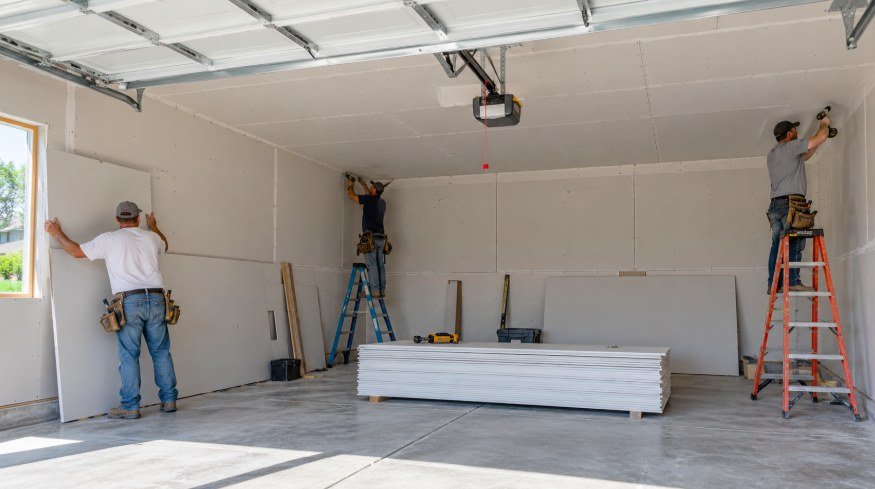
Installers hanging drywall on garage walls and ceiling around the door opener

Bathroom Drywall Installation

Bathrooms require careful material selection because of elevated humidity and moisture.

Drywall may be installed around vanity areas, ceilings, toilet areas, closets, and other appropriate bathroom surfaces.

Different sections of the bathroom may require different wall materials depending on the level of moisture exposure.

Proper installation helps create smooth surfaces for paint, tile transitions, cabinetry, mirrors, lighting, and other finishes.

Areas exposed directly to water may require specialized backing materials rather than conventional drywall.

Kitchen Drywall Installation

Kitchen drywall installation must coordinate closely with cabinetry, electrical systems, plumbing, ventilation, appliances, and backsplash areas.

New drywall may be required during kitchen remodeling, wall relocation, electrical upgrades, cabinet replacement, or complete reconstruction.

Panels are cut carefully around outlets, switches, plumbing connections, range hood openings, windows, doors, and lighting.

A properly installed drywall surface creates a clean base for paint, tile, cabinets, countertops, trim, and other kitchen finishes.

Type X Drywall Installation

Type X drywall is a specialized gypsum board commonly associated with fire-resistant wall and ceiling assemblies.

It is typically manufactured with additives that improve its performance when exposed to fire compared with standard drywall.

Type X panels may be specified in certain garages, commercial spaces, apartment buildings, utility areas, stair enclosures, corridors, and other locations depending on the construction design.

Installation should follow the required wall or ceiling assembly specifications.

Green Board Installation

Green board is a moisture-resistant drywall product traditionally used in certain areas where increased humidity resistance is desired.

It may be used on suitable bathroom walls, laundry rooms, utility spaces, kitchens, and other interior locations depending on project requirements.

Green board should not automatically be treated as a waterproof product.

Areas such as direct shower or tub surrounds may require other approved materials designed for continuous water exposure.

Cement Board Installation

Cement board is commonly used as a durable backing material for tile and other finishes in areas where moisture exposure may be higher.

It is often installed around showers, tubs, bathroom walls, kitchen backsplash areas, utility spaces, and other appropriate applications.

Cement board is heavier and more rigid than conventional drywall and requires suitable fasteners and installation methods.

When properly installed, it provides a strong base for tile and similar finishes.

Drywall Replacement

Existing drywall may need replacement when it is extensively damaged, deteriorated, improperly installed, or no longer suitable for the space.

Replacement projects may involve a small wall section, an entire room, a ceiling, or multiple areas throughout a property.

Common reasons for drywall replacement include large holes, water damage, major remodeling, repeated repairs, structural changes, or replacement of outdated interior finishes.

The damaged material can be removed, the underlying framing inspected as appropriate, and new drywall installed to restore the area.

A Complete Drywall Installation Process

A quality drywall installation project typically involves several important stages.

  1. 1

    Measure & Plan

    The work begins with measurements and material planning.

  2. 2

    Cut & Position

    Panels are then cut and positioned around the layout of the room, openings, mechanical systems, and architectural features.

  3. 3

    Secure & Prepare Joints

    After the drywall is secured, seams, inside corners, outside corners, screw heads, and other joints are prepared for taping and finishing.

  4. 4

    Finish

    Depending on the desired result, the surface may then receive multiple coats of joint compound, sanding, skim coating, texture, or a smooth finish before painting.

The quality of the installation directly affects every stage that follows.

Drywall Installation FAQs

We install drywall in new construction, remodels, additions, basements, garages, kitchens, bathrooms, and commercial interiors, on both walls and ceilings.

It depends on the space. Standard drywall works for most rooms, while bathrooms, garages, and some commercial areas may call for moisture-resistant, mold-resistant, fire-resistant (Type X), sound-control, green board, or cement board products.

Installation hangs and secures the panels. Taping, mudding, sanding, and finishing are the next stages, and we can complete the full process so the surface is ready for texture or paint.

New drywall installation typically starts from about $2.50 to $4.50 per square foot. Final pricing depends on project size, board type, access, finish level, and site conditions.

Yes. We remove damaged, deteriorated, or outdated drywall and install new panels, from a small section to a full room or ceiling.

Drywall Installation for Every Type of Interior

Different rooms and buildings require different approaches to drywall.

A garage may have different requirements than a bathroom. A basement may present different challenges than a kitchen. A sound-control wall may use a completely different assembly from a standard bedroom partition.

Selecting the appropriate materials and installing them correctly helps create walls and ceilings that perform properly while delivering a clean finished appearance.

From standard wall and ceiling installation to fire-resistant, moisture-resistant, mold-resistant, sound-control, Type X, green board, and cement board systems, professional drywall installation provides the foundation for a finished interior.

Whether the project involves new construction, remodeling, a single room, or complete drywall replacement, careful installation helps ensure that the next stages of finishing can be completed smoothly and efficiently.

Book Service

Prefer to talk? Call (323) 419-2033

Let’s Build
Better Spaces Together

Professional Drywall Services
for a Stronger, Brighter
Los Angeles