
Drywall Finishing Services

- Level 1 to Level 5, Smooth Walls & Textures -

  • Since 2010
  • Bonded And Insured
Downtown Los Angeles skyline with palm trees

Quality Walls
Stronger
Spaces

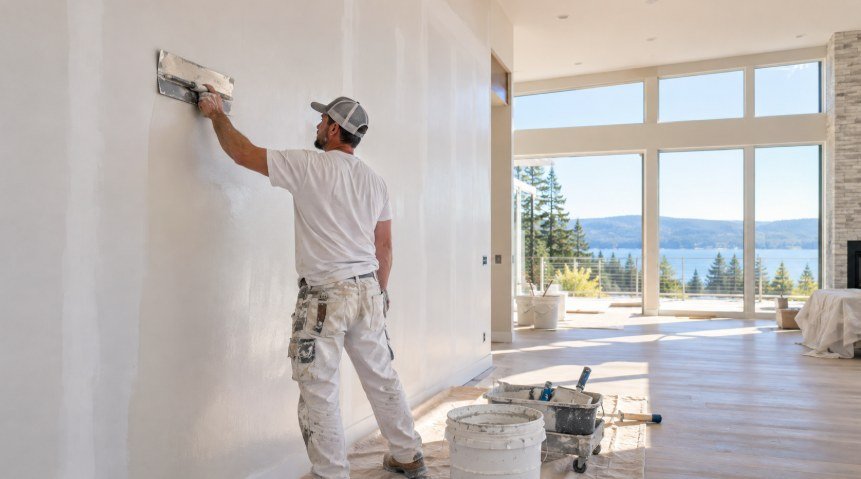
Drywall finisher skim coating a smooth Level 5 wall in a bright modern home

The Finish
Your Space
Deserves

Drywall Finishing Services

Drywall finishing is the stage that determines how smooth, clean, and complete walls and ceilings will look once the project is finished. After drywall panels are installed, the joints, fasteners, corners, patches, and transitions must be taped, coated with joint compound, sanded, and prepared to the level required for the final surface treatment.

Different projects require different finish levels. A garage, utility space, smooth painted wall, textured ceiling, luxury interior, and commercial building may all use different finishing standards.

Our drywall finishing services include Levels 1 through 5, smooth wall finishes, skim coating, texture application, texture matching, ceiling and wall finishes, and preparation for paint in both residential and commercial properties.

L1

Level 1 Drywall Finish

A Level 1 finish is one of the most basic drywall finishing levels.

Joint tape is embedded into joint compound at seams and inside corners, but additional finishing coats are generally limited.

This level is typically used in areas where the finished appearance is not a major concern, such as certain concealed spaces, service areas, or unfinished parts of a building.

A Level 1 finish is not intended to create a paint-ready decorative surface.
L2

Level 2 Drywall Finish

A Level 2 drywall finish provides an additional layer of compound over taped joints and fasteners.

The surface is smoother than Level 1 but still not intended for high-visibility decorative areas.

This type of finish may be appropriate in certain garages, warehouses, utility rooms, storage areas, or surfaces that will receive another material.

The exact application depends on the building design and the intended final covering.

L3

Level 3 Drywall Finish

A Level 3 finish provides more complete coverage over joints, corners, and fasteners.

It can be used as a base for heavier wall textures or similar finishes that help conceal minor surface variations.

This level generally includes an additional coat of compound over taped joints and improved smoothing compared with lower levels.

Level 3 is typically not the first choice for smooth walls with flat or glossy paint.

L4

Level 4 Drywall Finish

Level 4 is commonly used for standard painted walls and ceilings.

Multiple coats of joint compound are applied over seams, fasteners, and corners, then sanded to create a smooth surface.

This finish can work well with many interior paint systems and light textures.

Proper lighting and surface preparation remain important because strong side lighting can reveal small imperfections even on a Level 4 wall.

L5

Level 5 Drywall Finish

Level 5 is the highest commonly referenced drywall finishing level.

It includes the standard joint finishing process plus a thin skim coat over the entire drywall surface.

This additional layer helps create more consistent porosity and reduces visible differences between drywall paper and joint compound.

Level 5 is often considered for smooth walls, strong natural lighting, high-end interiors, dark paint colors, glossy finishes, or areas where surface imperfections would be especially noticeable.

Smooth Wall Finish

A smooth wall finish creates a clean surface without decorative texture.

This type of finish requires careful taping, mudding, feathering, sanding, and surface inspection.

Because there is no texture to hide imperfections, seams, patches, ridges, and sanding marks need to be minimized.

Smooth walls are popular in modern interiors where clean lines and simple finishes are desired.

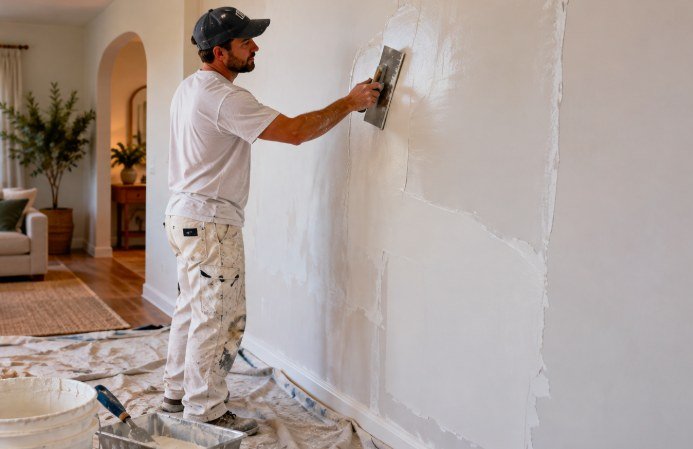
Drywall finisher troweling a smooth skim coat finish on a living room wall

Skim Coat Finish

A skim coat is a thin layer of joint compound spread over a larger wall or ceiling area.

It can be used to improve an uneven surface, cover minor texture, blend multiple repairs, or create a smoother finish.

Skim coating may also be part of a Level 5 system.

After the compound dries, the surface can be lightly sanded and inspected before primer and paint are applied.

Drywall Preparation for Paint

Good paint results begin with properly prepared drywall.

Before painting, the drywall should be checked for ridges, scratches, pinholes, visible seams, rough patches, sanding marks, and dust.

Any remaining imperfections can be touched up with additional compound and sanded as needed.

The surface should then be cleaned and primed appropriately.

Primer helps seal the drywall and joint compound so the final paint coat has a more uniform appearance.

Drywall Texture Finish

Texture can add visual character while also helping disguise minor surface variations.

Drywall texture may be applied to walls, ceilings, or selected architectural features.

Different application methods create different patterns and levels of depth.

Texture can be used in new construction, remodeling, repair work, or when matching an existing finish.

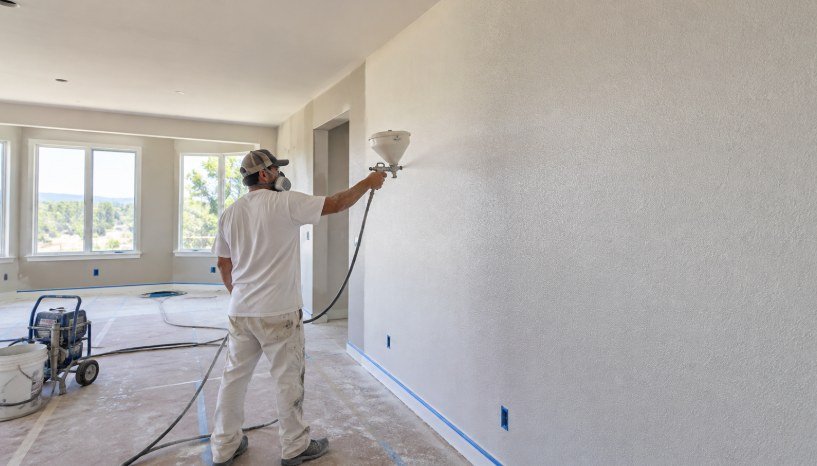
Drywall finisher spraying texture on a wall with a hopper gun

Ceiling Texture

Ceiling texture can be used to create visual interest and help soften the appearance of large ceiling surfaces.

Common options include orange peel, knockdown, skip trowel, hand texture, and other decorative patterns.

Ceiling texture may be installed during new construction, remodeling, texture replacement, or repair work.

Careful preparation is important around recessed lights, vents, beams, trim, and other ceiling features.

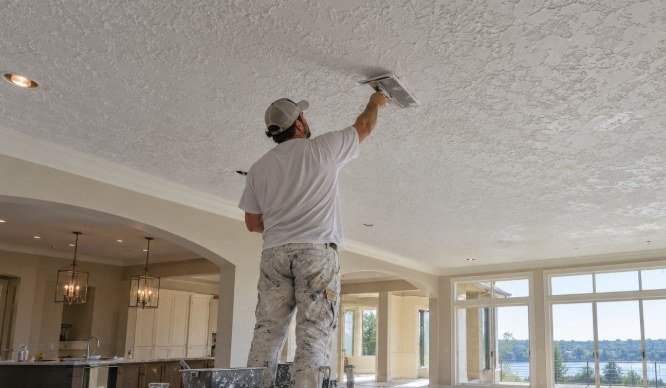
Drywall finisher applying hand texture to a ceiling in an open living area

Wall Texture

Wall texture can be used throughout a room or only on selected surfaces.

Texture may help create a more decorative appearance and can sometimes make minor surface variations less noticeable than a completely smooth finish.

Wall texture can be applied in bedrooms, living rooms, hallways, offices, commercial spaces, and many other interiors.

Consistency is especially important when multiple walls connect within the same room.

Texture Matching

Texture matching is important when only part of a wall or ceiling has been repaired.

A new patch with a different texture can remain visible even if the drywall repair itself is smooth.

Matching involves studying the surrounding pattern, size, density, and application technique before applying new texture.

The objective is to make the repaired section blend as naturally as possible with the existing finish.

Perfect matching can sometimes be difficult on older or heavily layered surfaces, but careful technique can significantly improve the transition.

Commercial Drywall Finishing

Commercial drywall finishing may be required in offices, retail stores, restaurants, hotels, apartment buildings, medical facilities, schools, warehouses, and tenant improvement projects.

Large commercial interiors often include long walls, high ceilings, metal framing systems, soffits, corridors, and multiple finish requirements.

Some areas may use basic finishes, while customer-facing spaces may require higher-level smooth finishes or decorative textures.

Consistency across large surfaces is especially important in commercial work because strong lighting and long sightlines can reveal imperfections.

See our commercial drywall services →

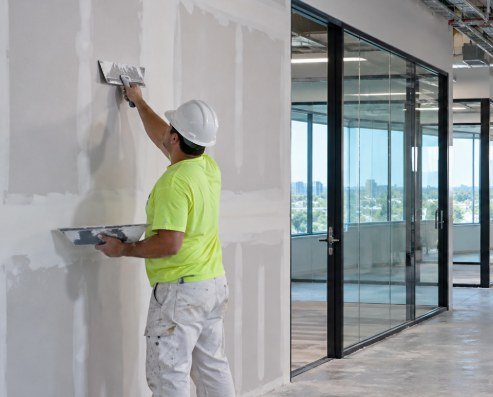
Commercial drywall finisher coating office walls beside glass partitions

Residential Drywall Finishing

Residential drywall finishing can be completed in new homes, additions, basements, garages, kitchens, bathrooms, bedrooms, living rooms, condos, apartments, and townhouses.

Projects may involve standard Level 4 finishes, Level 5 smooth walls, texture application, ceiling finishing, repairs, or complete remodeling.

Residential interiors often include a combination of smooth surfaces and textures depending on the design of the home.

Attention to corners, seams, lighting, and transitions helps create a more polished final result.

See our residential drywall services →

Choosing the Right Drywall Finish

The appropriate finish depends on how the space will be used and what final coating will be applied.

A utility area may not need the same finish as a luxury living room. A textured wall may require less surface refinement than a smooth wall under strong natural light.

Paint sheen also matters. Flat paint is generally more forgiving, while satin, semi-gloss, darker colors, and strong side lighting can make surface imperfections easier to see.

Selecting the correct finish level from the beginning helps avoid unnecessary work while still creating the appearance the project requires.

Drywall Finishing FAQs

It depends on the space and the final coating. Level 4 is common for standard painted walls, while Level 5 is often chosen for smooth walls, strong natural light, dark colors, or glossy paint.

Level 5 includes the standard joint finishing process plus a thin skim coat over the entire surface, creating a more uniform wall for high-visibility areas.

We apply orange peel, knockdown, skip trowel, and hand textures on walls and ceilings, and we can match an existing texture after repairs.

Yes. Flat paint is more forgiving, while satin, semi-gloss, and darker colors can make surface imperfections easier to see, so they may need a higher finish level.

Yes. We check for ridges, pinholes, visible seams, and sanding marks, touch them up, and clean the surface so it is ready for primer and paint.

Complete Drywall Finishing Solutions

Drywall finishing brings together taping, mudding, sanding, skim coating, texture application, and final surface preparation.

Whether the project requires a basic finish, smooth walls, Level 5 finishing, orange peel, knockdown, skip trowel, texture matching, or complete preparation for paint, every stage affects the final appearance.

Professional drywall finishing helps create cleaner transitions, straighter corners, smoother walls, consistent textures, and surfaces that are ready for primer, paint, or the final decorative treatment.

From residential rooms to large commercial interiors, the goal is to deliver the finish level and surface style that best suits the space and the final design.

Book Service

Prefer to talk? Call (323) 419-2033

Let’s Build
Better Spaces Together

Professional Drywall Services
for a Stronger, Brighter
Los Angeles