
Drywall Repair Services

- Holes, Cracks, Water Damage & More -

  • Since 2010
  • Bonded And Insured
Downtown Los Angeles skyline with palm trees

Quality Walls
Stronger
Spaces

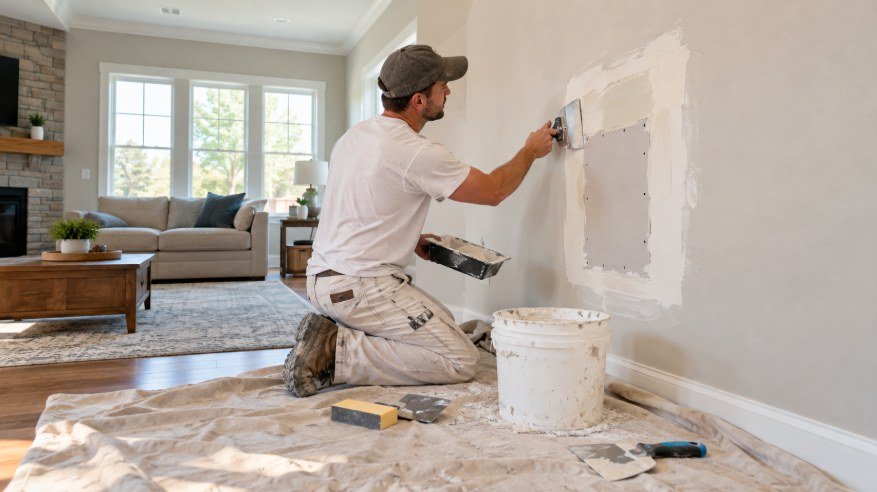
Drywall technician finishing a wall patch in a Los Angeles living room

Repairs That
Blend In
Seamlessly

Drywall Repair Services

Damaged drywall can quickly affect the appearance of an otherwise well-maintained home or commercial space. Holes, cracks, dents, popped fasteners, damaged seams, water stains, sagging sections, and repair openings from plumbing or electrical work can all leave walls and ceilings looking unfinished.

Professional drywall repair is about more than covering visible damage. The damaged area should be evaluated, loose or compromised material removed when necessary, the surface repaired with appropriate materials, and the final finish blended into the surrounding wall or ceiling.

Our drywall repair services cover everything from small cosmetic repairs to large damaged sections and complete drywall replacement.

Drywall Hole Repair

Holes in drywall can be caused by furniture, door handles, accidents, mounting hardware, renovations, plumbing access, electrical work, or removed fixtures.

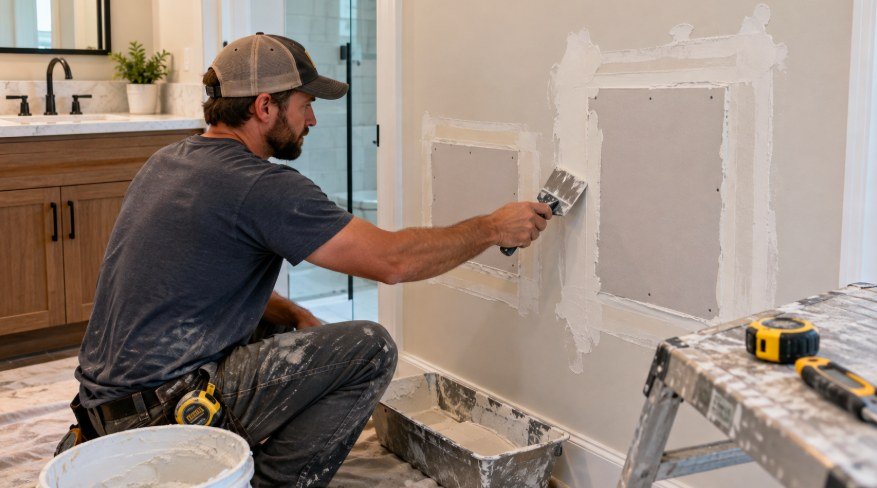
Drywall hole repair may involve filling a small opening or cutting out a larger damaged section and installing a new drywall patch.

The repaired area can then be taped, coated with joint compound, sanded, and prepared so it blends more naturally with the surrounding surface.

Drywall technician mudding two new patches in a bathroom wall

Small Hole Repair

Small holes are common around homes, offices, apartments, and rental properties.

They may come from screws, anchors, wall-mounted accessories, picture hooks, or minor impact damage.

Small hole repair usually focuses on creating a flat surface without unnecessarily disturbing a large section of the wall.

Once repaired and sanded, the area can be prepared for primer, paint, or texture matching.
Large Hole Repair

Large openings require a more structural repair approach.

The damaged section may need to be cut back to solid drywall or framing before a replacement piece can be installed.

Large hole repairs are common after accidents, plumbing work, electrical upgrades, HVAC access, remodeling, or removal of built-in fixtures.

Careful measurement and patch placement help reduce visible transitions between the new and existing drywall.

Drywall Crack Repair

Drywall cracks may develop along seams, corners, ceilings, doorways, or other areas.

Some cracks are cosmetic, while recurring cracks may indicate movement that should be understood before the surface is repaired.

A drywall crack repair may involve removing loose material, reinforcing the damaged area, applying joint compound, sanding, and preparing the repaired section for finishing.

The goal is to create a smooth surface rather than simply covering the crack.

Nail Pop Repair

Nail pops appear as small raised circles or bumps where drywall fasteners move toward the surface.

They are especially noticeable after walls or ceilings are painted.

Repair may involve securing the drywall properly, addressing the raised fastener, applying joint compound, and smoothing the area.

For multiple nail pops, surrounding sections may also be checked to determine whether additional fasteners need attention.

Screw Pop Repair

Screw pops are similar to nail pops and may appear as small bumps, cracks, or circular imperfections.

The repair process usually involves checking whether the drywall panel is securely attached before refinishing the damaged spot.

A proper repair helps avoid simply covering the symptom while leaving a loose panel underneath.

Once secured, the area can be coated, sanded, and prepared for paint.

Drywall Seam Repair

Drywall seams can become visible when tape loosens, compound cracks, or movement affects the joint between panels.

Common signs include raised tape, bubbling, cracks, ridges, or visible lines along the wall or ceiling.

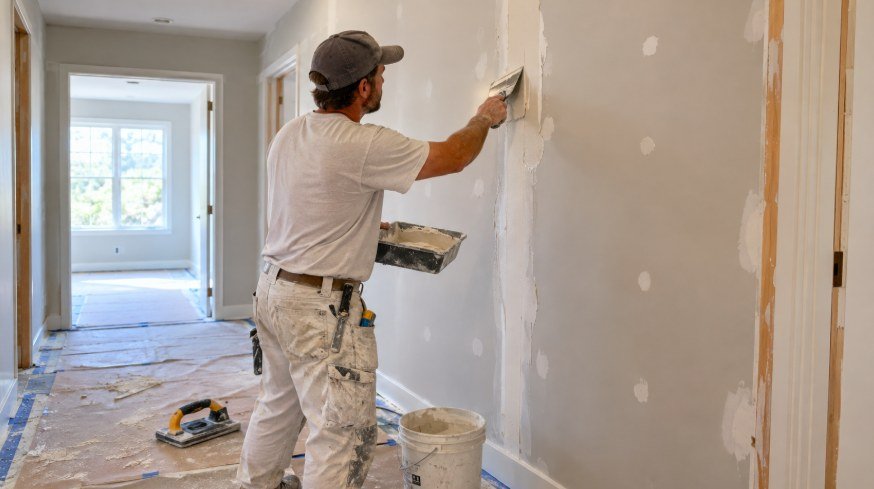
Seam repair may require removing loose tape or compound, reinforcing the joint, applying new finishing material, and feathering the repair into the surrounding surface.

Careful blending is important because poorly repaired seams can remain visible after painting.

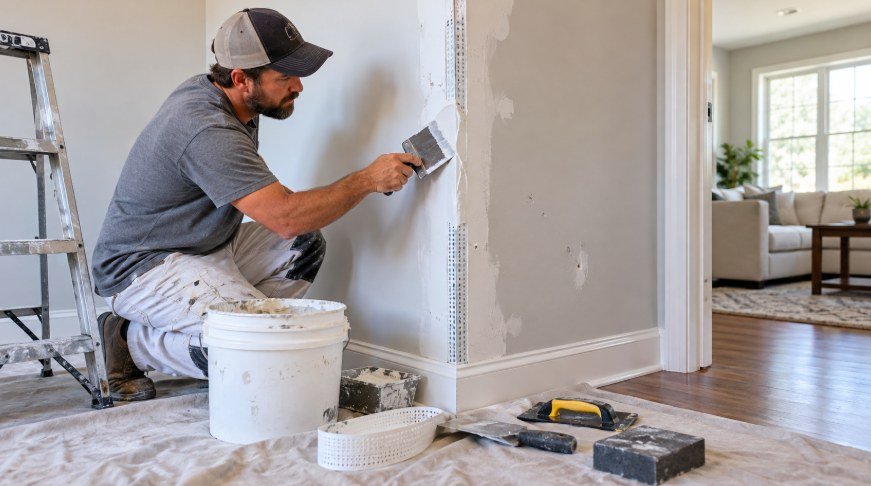
Drywall finisher applying joint compound to a wall seam in a hallway

Drywall Corner Repair

Inside and outside corners can be damaged by impact, movement, furniture, carts, or everyday wear.

Outside corners may involve damaged corner bead, while inside corners may develop cracks or loose tape.

Corner repair requires rebuilding a straight, durable edge before applying finishing compound.

Once sanded properly, the repaired corner can be prepared for paint or texture.

Technician applying compound over new corner bead on an outside wall corner

Drywall Dent Repair

Dents may not create a complete hole but can still make a wall look damaged.

They may result from furniture, moving equipment, children, tools, or minor impacts.

Shallow dents can often be repaired without removing a large section of drywall.

The damaged surface is filled and leveled, then sanded to create a smoother transition with the surrounding wall.

Drywall Patch Repair

Patch repair is commonly used for localized damage where complete wall replacement is unnecessary.

A drywall patch can be installed for holes, cutouts, damaged sections, or access openings.

The patch should fit securely within the surrounding drywall and be finished so the edges transition gradually into the existing surface.

Proper taping, mudding, sanding, and feathering help reduce the visibility of the repair.

Texture Matching

Repairing the drywall is only part of the job when surrounding walls or ceilings have texture.

Texture matching helps the repaired section blend more naturally with the existing surface.

Common finishes may include orange peel, knockdown, skip trowel, hand texture, or other patterns.

Existing textures can vary significantly, so the repair may require adjusting application technique, material consistency, and coverage to achieve a closer match.

Leak Damage Drywall Repair

Plumbing leaks, appliance leaks, HVAC condensation, and other water problems can damage both walls and ceilings.

Leak-related drywall damage may appear as stains, bubbling paint, soft spots, sagging panels, or deteriorated seams.

The repair may involve removing the affected drywall, allowing the area to dry appropriately, and replacing damaged material.

The final surface can then be taped, finished, sanded, and prepared for paint.

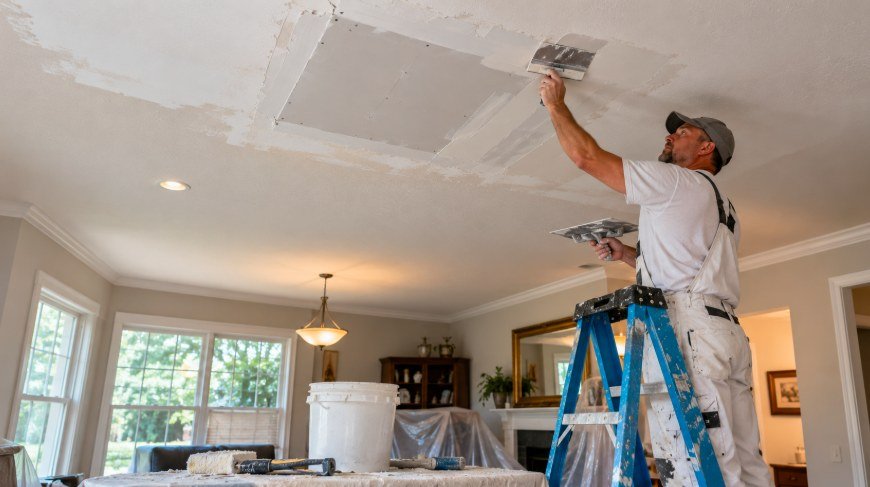
Drywall technician on a ladder finishing a ceiling patch after leak damage

Drywall After Plumbing Repair

Plumbers often need to open walls or ceilings to reach pipes, valves, drains, showers, tubs, sinks, or other components.

After the plumbing work is completed, the access opening can be repaired with new drywall.

The process may include rebuilding backing, installing a patch, taping seams, applying joint compound, sanding, and matching the surrounding texture.

This helps return the wall or ceiling to a finished appearance after the mechanical work is complete.

Drywall After Electrical Work

Electrical projects may leave openings around wiring, outlets, switches, electrical panels, recessed lighting, or newly routed circuits.

Once the electrical work is complete and access is no longer needed, the drywall can be restored.

Repairing these areas properly requires accurate cutting around electrical components while maintaining a neat transition to the existing surface.

Drywall After HVAC Work

HVAC installation and repair can affect drywall around vents, ducts, air handlers, thermostats, registers, and mechanical access points.

Openings may be created in walls or ceilings to install or service equipment.

After the HVAC work is complete, drywall can be patched or replaced around the new components.

Careful finishing helps create cleaner transitions around vents and other visible mechanical features.

Drywall After Foundation Repair

Foundation movement can sometimes contribute to cracking around walls, ceilings, windows, doors, and interior corners.

Drywall repairs are usually best completed after the underlying structural issue has been evaluated or corrected.

The damaged sections may involve cracks, separated seams, broken corners, or larger areas that require patching.

Once movement is stabilized as appropriate, drywall can be repaired and refinished to improve the appearance of the interior.

Drywall Replacement

Some drywall is too damaged for a small patch.

Complete or partial replacement may be appropriate when drywall has extensive water damage, widespread cracking, severe impact damage, significant sagging, deterioration, or repeated failed repairs.

Replacement allows damaged material to be removed and new panels installed over sound framing.

Depending on the project, drywall replacement may involve one section, one complete wall, a ceiling, or several rooms.

Repairing Walls and Ceilings the Right Way

A successful drywall repair should address both the visible damage and the condition behind it.

Before repairing a wall or ceiling, it is important to understand why the damage occurred. Covering a crack caused by continued movement or replacing drywall below an active leak may only create another repair later.

Once the underlying cause has been addressed, drywall can be restored through patching, replacement, taping, joint compound, sanding, and texture matching.

Drywall Repair FAQs

Yes. Small holes are filled and smoothed, while larger holes are cut back to solid material and repaired with a fitted drywall patch, then taped, mudded, and sanded.

Small hole repair typically starts from about $125 and drywall patch repair from about $150. Final pricing depends on the size of the damage, access, finish level, and site conditions.

In many cases, yes. We match common textures such as orange peel, knockdown, and skip trowel so the repaired area blends with the surrounding wall or ceiling.

Yes. The source of the water should be corrected and the area allowed to dry first. Otherwise the new drywall can be damaged again.

Yes. We close access openings left by plumbers, electricians, and HVAC technicians and finish them to match the surrounding surface.

Complete Drywall Repair Solutions

Drywall damage comes in many forms, and each type requires a slightly different repair method.

Small holes and dents may need only localized surface work, while large holes, water damage, sagging drywall, and major remodeling openings can require replacement sections.

From nail pops and cracked seams to plumbing access holes and damaged ceilings, careful drywall repair helps restore clean walls and ceilings without unnecessarily replacing unaffected areas.

Whether the project involves a minor patch or extensive drywall replacement, the goal is to create a durable repair with smooth transitions and a finished surface that is ready for primer, paint, or the next stage of the project.

Book Service

Prefer to talk? Call (323) 419-2033

Let’s Build
Better Spaces Together

Professional Drywall Services
for a Stronger, Brighter
Los Angeles